 English
 Español
Plastic crates are widely used in industries such as logistics, agriculture, seafood, warehousing, and manufacturing. Before starting production, many buyers often face the same question:
Why do plastic crate moulds vary so much in price?
Why are some moulds more durable while others wear out quickly?
Why do some moulds achieve higher production efficiency?
In fact, choosing the right plastic crate mould depends on several key factors, including the application scenario, production volume, product structure, budget, and long-term manufacturing cost. Selecting the right mould not only ensures product quality but also reduces production risks in the long run.
1. Identify the Application of the Plastic Crate
Different industries have different requirements for crate strength, durability, and mould design. Therefore, the first step in choosing a plastic crate injection mould is to understand how the crate will be used.
Agricultural Crates / Fruit & Vegetable Crates
Main characteristics:Good ventilation,Lightweight structure,Stackable design
Mould design considerations:
Proper rib layout to prevent cracking or deformation
Optimized venting system for better molding quality
Efficient cooling system for high-speed production
For this type of product, KELONG typically recommends a medium-life mould configuration, balancing durability and cost efficiency.
Industrial Crates / Logistics Crates
Main characteristics:
High load-bearing capacity
Strong impact resistance
Frequent and long-term use
Mould design considerations:
Higher hardness mould steel
Reinforced edges and corners
Stable ejection system to prevent sticking or whitening marks
For these applications, a high-durability crate mould solution is usually recommended to ensure long service life and stable mass production.
2. Choose the Right Mould Configuration Based on Budget
Another important factor when selecting a plastic crate mould is the balance between initial investment and long-term production needs.
Economic Configuration
Suitable for:
Small production volumes
Short-term projects
Standard plastic crates
Advantages:
Lower initial cost
Faster delivery
Meets basic production requirements
This option is ideal for companies that want a cost-effective mould solution.
Standard Configuration (Most Recommended)
This configuration is suitable for most factories engaged in long-term crate production.
Advantages include:
Balanced mould lifespan
Stable production performance
Lower failure rate
It offers the best balance between quality, cost, and production efficiency.
High-Life Premium Configuration
Designed for:
High production volumes
Heavy-duty crates
Long-term industrial use
Features:
High-quality mould steel
Precision machining
Longer mould lifespan
Although the initial investment is higher, it often results in lower overall manufacturing costs over time.
3. Common Problems in Plastic Crate Production
During production, several issues may occur if the mould design is not optimized:
Product deformation
Warping
Cracking
A professional crate injection mould design will address these issues through:
Proper wall thickness design
Optimized rib structure
Improved demoulding system
Efficient cooling layout
These factors directly influence both product quality and production efficiency.
4. Choose an Experienced Plastic Crate Mould Manufacturer
A mould is not just a one-time purchase—it is a long-term manufacturing investment. Reliable technical support and after-sales service are equally important.
A professional mould manufacturer should provide:
Mould testing and adjustment
Maintenance and repair support
Regular mould servicing
Design modification when needed
Choosing an experienced supplier helps ensure stable production and lower operational risk.
KELONG MOULD – Professional Plastic Crate Mould Manufacturer
KELONG MOULD has years of experience in manufacturing plastic crate moulds. Based on your product design, production requirements, and budget, we provide customized, high-stability, and long-life mould solutions to support efficient and reliable production.
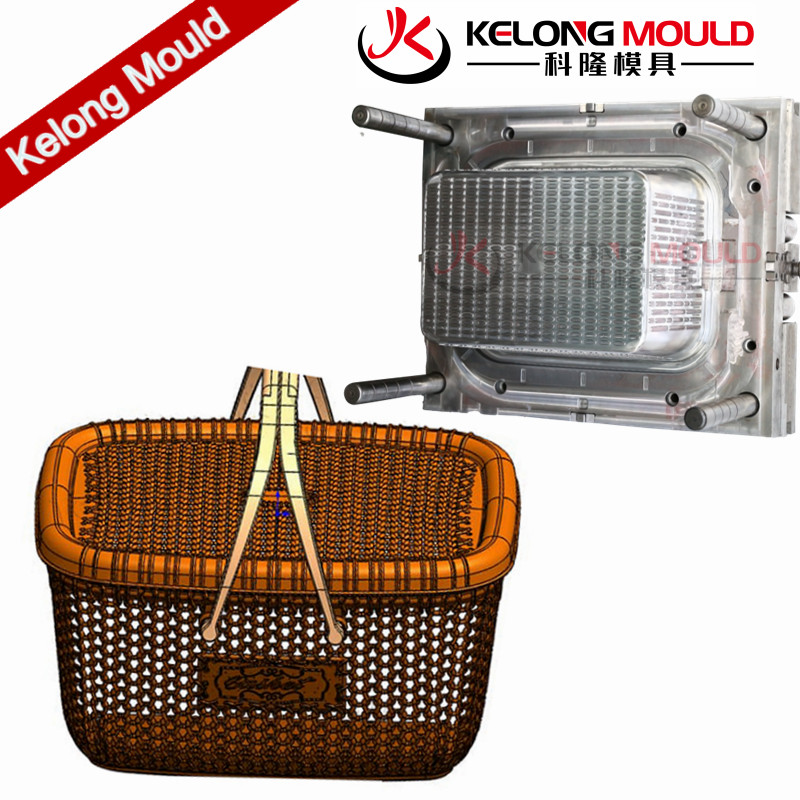
.jpg "Daily Storage Basket Mould (Large)")
.jpg "Storage Basket Mould (Small)")